
As transportation electrification accelerates globally, the critical bottleneck has shifted from battery capacity to grid power capacity. Dynamic EV Load Management systems have evolved from a luxury option to a hard operational mandate for commercial complexes, industrial parks, and fleet operators.
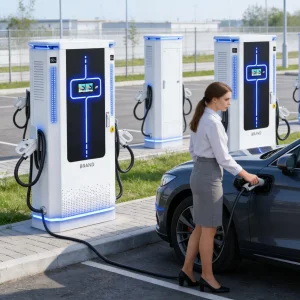
The installation of electric vehicle supply equipment (EVSE) at scale presents a direct challenge to local power distribution systems. Introducing ten 22kW AC chargers or a series of 120kW DC fast chargers can easily exceed the baseline supply of a commercial property. Building owners face either cost-prohibitive grid transformer upgrades or severe utility penalties due to peak demand charges. Our OEM/ODM Electric Vehicle Load Management solutions offer a software-and-hardware-integrated response, allowing operators to scale charging hardware capacity by up to 300% without upgrading their structural electrical distribution infrastructure.
In a static system, power is split evenly among active chargers regardless of vehicle demand, grid status, or building usage. Dynamic Load Management (DLM) monitors real-time building power draw and dynamically adjusts output. When the building's HVAC and lighting systems consume less power, the residual capacity is automatically redirected to the EV chargers. This closed-loop control guarantees zero building overload while optimizing charging speeds throughout the day.
Reduction in Infrastructure Upgrade Costs
Dynamic Control Response Latency
OCPP 1.6J & 2.0.1 Compliance
Global Installations Serviced
From North America to the European Union and the Asia-Pacific region, grid resilience and grid integration policies are forcing enterprise networks to deploy active power management systems. For instance, the European Union's AFIR guidelines and the US NEVI standards emphasize smart charging functionalities that mitigate regional distribution grid strain.
Integrating building management systems (BMS) with local solar and energy storage systems (BESS) to flatten consumption curves.
Capping demand spikes at peak tariff hours, protecting operators from utility penalty fees and reducing electricity expenses.
Preventing single-phase voltage drops by real-time phase switching, ensuring the long-term health of the grid transformer.
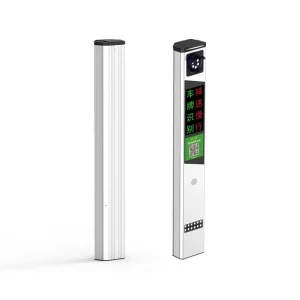
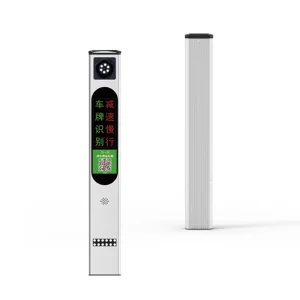
Additionally, transport hubs and high-frequency corridors demand ultra-reliable localized systems. In transit situations where quick-turnaround fleets require high-power charge events, integration with license plate recognition systems like Easco LPR devices allows operators to associate vehicle priority classes (e.g., VIP, express logistics, overnight fleet) directly with dynamic load priority routing algorithms.
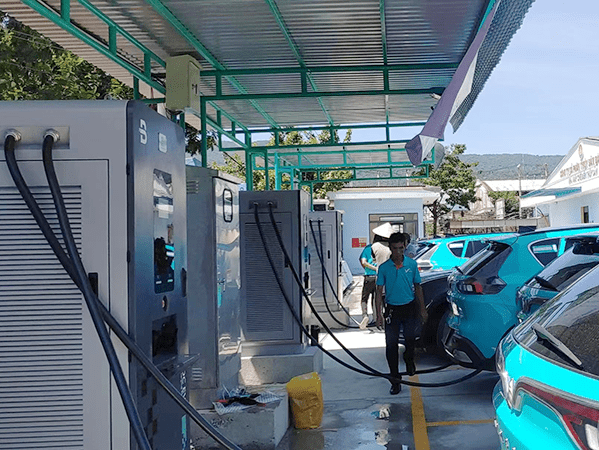
Dongguan Voltra Charger Co., Ltd. is a forward-thinking manufacturer specializing in smart EV charging solutions for residential, commercial, and fleet applications. With a strong focus on innovation and energy efficiency, the company integrates research and development, production, and global sales to deliver reliable and intelligent charging infrastructure.
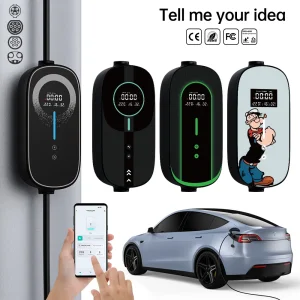
Voltra Charger offers a comprehensive product portfolio, including home EV charging stations, commercial charging systems, fleet charging solutions, and advanced charging power management units. Designed to meet diverse customer needs, its solutions support both AC and DC charging, ensuring compatibility with a wide range of electric vehicles.
Driven by the growing demand for sustainable mobility, the company emphasizes intelligent power management technologies such as load balancing, real-time monitoring, and energy optimization. These features help users reduce operational costs while improving charging efficiency and grid stability.
Dongguan Voltra Charger Co., Ltd. adheres to strict international quality standards and continuously invests in technological upgrades to enhance product performance and safety. Its solutions are widely applied in residential communities, office buildings, public charging networks, and logistics fleets.
With a commitment to green energy and smart transportation, Voltra Charger aims to become a trusted global partner in the EV charging industry, empowering customers with efficient, safe, and future-ready charging solutions.
As a dedicated OEM/ODM manufacturer in Dongguan—the global hardware manufacturing capital—we leverage a deeply integrated supply chain that spans raw materials sourcing, customized PCBA manufacturing, specialized enclosure molding, and advanced laboratory validation. This local density enables significant operational and design advantages:
| Feature Set | Standard Solution | Custom OEM/ODM Solution |
|---|---|---|
| Communications | OCPP 1.6J JSON, Modbus TCP | OCPP 2.0.1, custom proprietary APIs, ISO 15118 integrations |
| Enclosure Design | Standard sheet-metal or plastic | Custom industrial design, brand-matched colors, anti-graffiti coatings |
| Dynamic Logic | Local CT Clamps / Meter sampling | API integrations with local solar microgrids & energy storage systems |
| Certifications | CE, RoHS | UL, FCC, TUV, KC, UKCA specialized co-certifications |
Depending on regional utility pricing structures and localized grid realities, dynamic load management exhibits distinct configurations:
In large commercial buildings, the main electrical panels are typically sized for standard commercial operations, leaving minimal buffer for vehicle charging. The load management controller queries the main incoming circuit breaker via Modbus RTU at 10ms intervals. During midday hours, as elevators and air-conditioning units hit peak usage, the load manager curtails output across the EV charger grid. In the late afternoon, as the office building load falls, charging rates automatically scale to maximum potential.
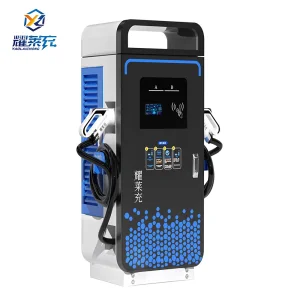
Fleets require reliable, guaranteed charge states before early-morning dispatches. Utilizing our high-power dynamic solutions like the 60kW to 240kW CCS2 DC chargers, fleet management software defines priority schedules. Vehicles with departure windows scheduled within 2 hours receive priority high-current routes, while vehicles scheduled for overnight dwell times are trickle-charged during lower-tariff hours.
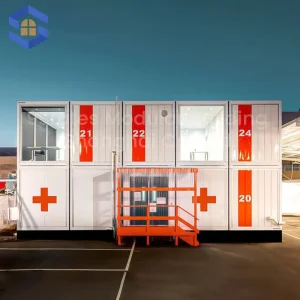
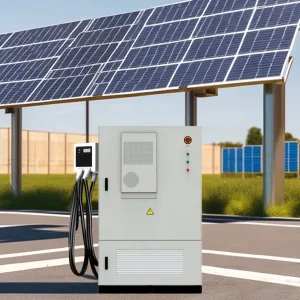
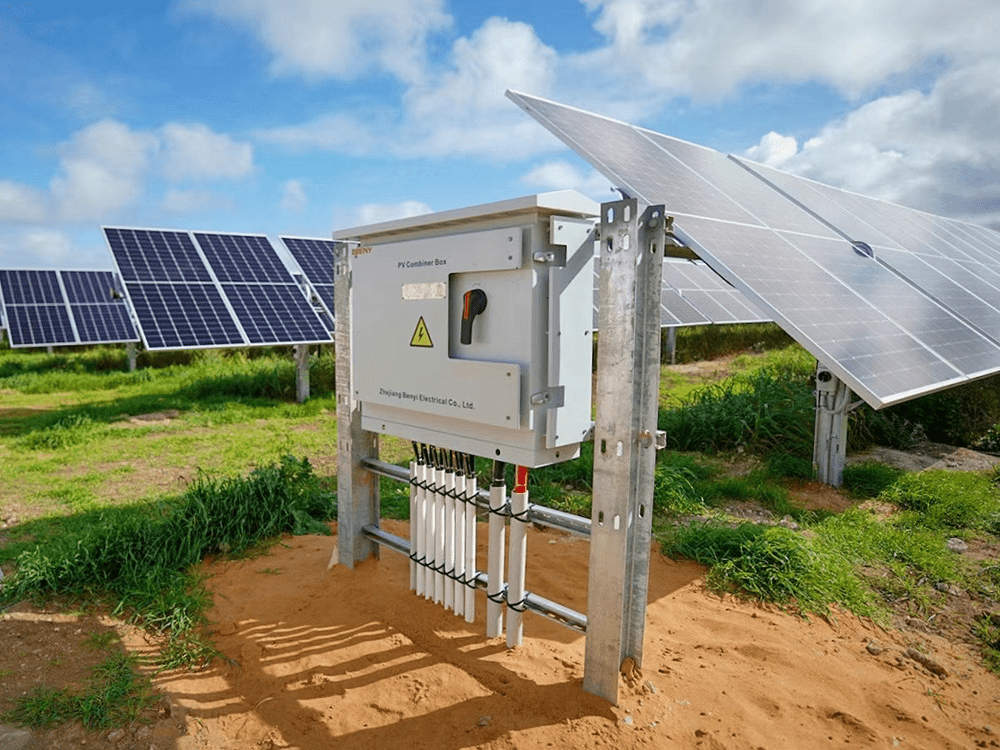
In remote applications, temporary operations, or locations with strict grid-connection caps, local load management operates in conjunction with mobile containers and localized storage systems. This includes linking charging grids with units like the prefabricated mobile container shelter systems or integrating directly with large-scale photovoltaic-energy storage systems. The dynamic controller routes excess solar power directly to plugged vehicles, eliminating grid dependence entirely.
Our dynamic load management controllers support both Modbus TCP/RTU protocol formats and RESTful APIs. This allows integration with major building management systems like BACnet or proprietary building control systems to read active real-time building usage directly.
Safety is our primary parameter. If local communication fails (e.g., Ethernet cable disconnection or local Wi-Fi dropout), individual chargers automatically fall back to their pre-configured minimum safety current limit (typically 6A or 8A depending on the site requirements) to prevent grid overload.
Yes. Our advanced load management algorithms perform real-time monitoring of each phase (L1, L2, L3). If a phase imbalance is detected due to single-phase EV charging loads, the controller automatically redistributes the charging currents across the available phases or curtails the charging rate on the overloaded phase to ensure phase stability.
Yes, our next-generation control modules natively support the OCPP 2.0.1 protocol. This includes advanced features such as transaction handling, enhanced security profiles, and improved smart charging commands for utility interaction.
For standard custom software branding (UI colors, logo configuration, and API endpoint integration), the typical lead time is 4-6 weeks. For complex protocol changes or custom hardware integrations, our R&D engineering team can provide functional prototypes within 8-12 weeks.
We carry full international certification tracks including CE, TUV, and RoHS. For specific local market requirements (such as UL in North America or KC in South Korea), our engineering team coordinates the compliance testing and co-certification processes with international laboratories to ensure seamless grid validation.
Yes. Our system integrates directly with energy storage configurations like the 215kwh BESS. When operating off-grid, the load manager dynamically matches the charging load to the immediate power output from the BESS and Solar PV inverters, maintaining system stability without relying on grid connection.
 Voltura Charger